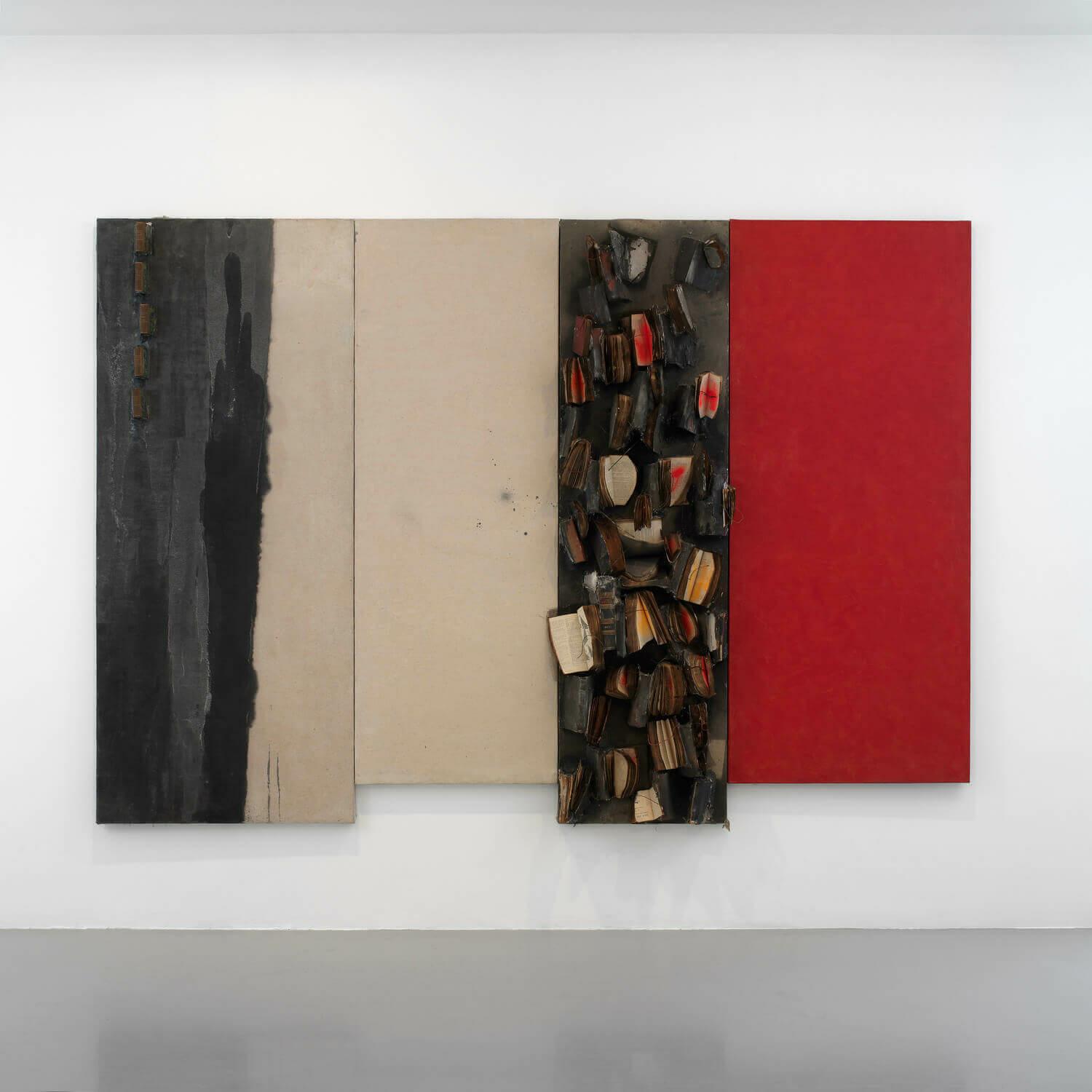
John Latham
Four Phases of the Sun, 1963
Books, wires, plaster, paint on canvas on hardboard
229 x 314 x 23 cm
90 1/8 x 123 5/8 x 9 in
Sean Scully Featured in ‘Ground Zero 360 – Remembrance’ at the New York City Fire Museum
‘Cézanne et nous’ at the Grand Palais, Paris, 23 September 2026 – 17 January 2027
‘The cosmic paradox of Anish Kapoor’ - Prospect Magazine
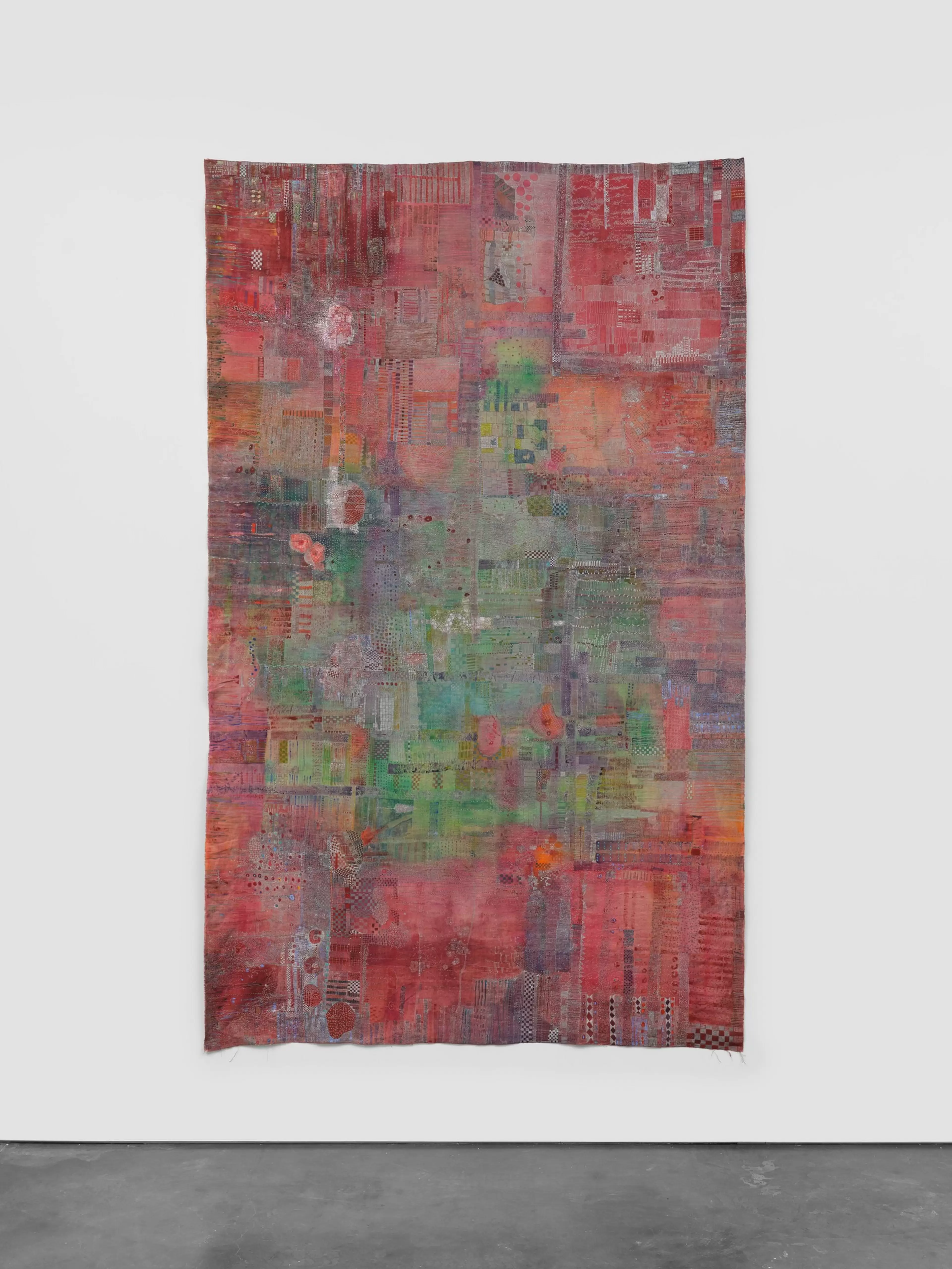
‘Huguette Caland: A Life in a Few Lines’ at the Hammer Museum

'Ha Chong-Hyun: 'The technique was revolutionary'
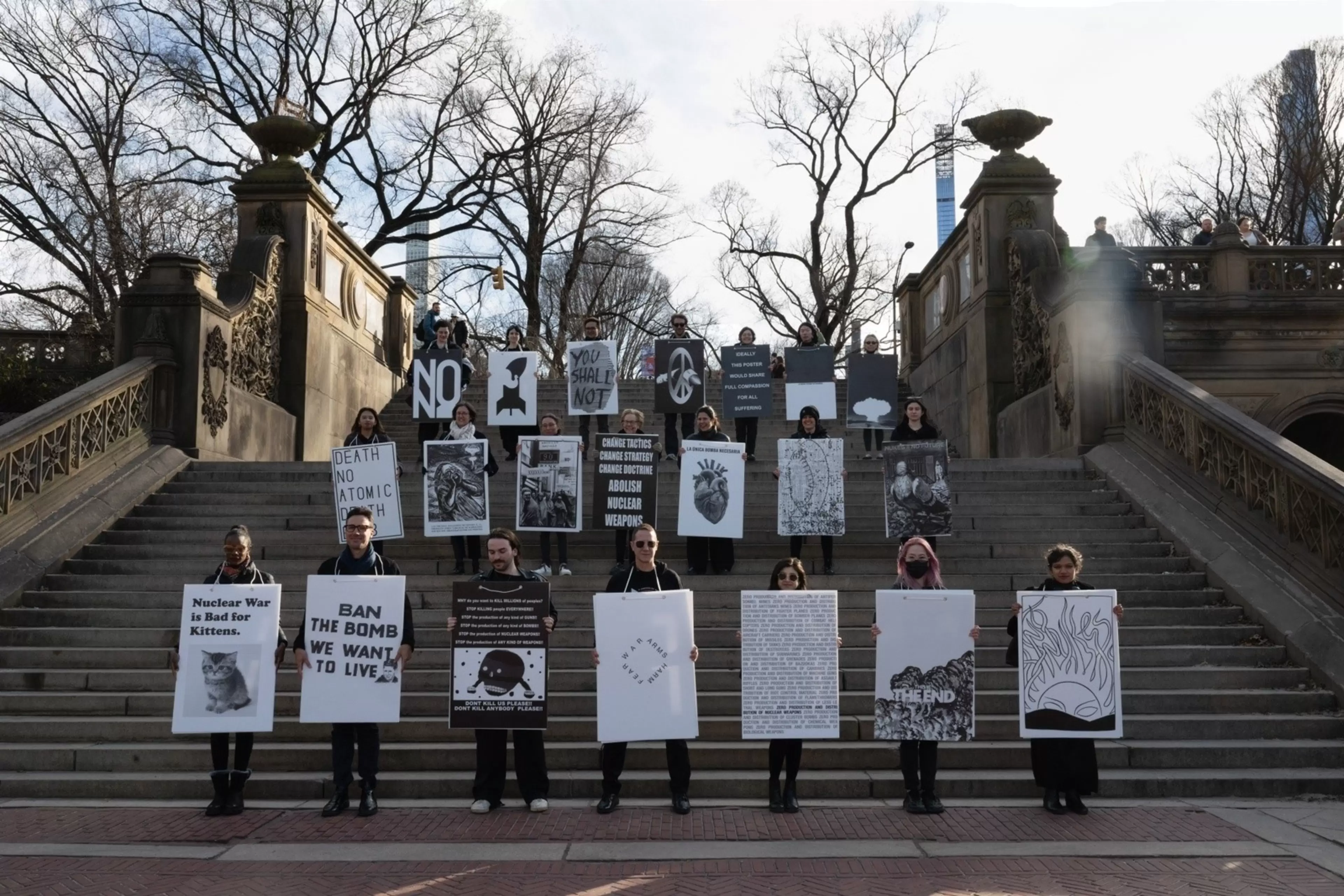
Pedro Reyes Featured in ‘Homeroom: Artists Against the Bomb’ at MoMA PS1
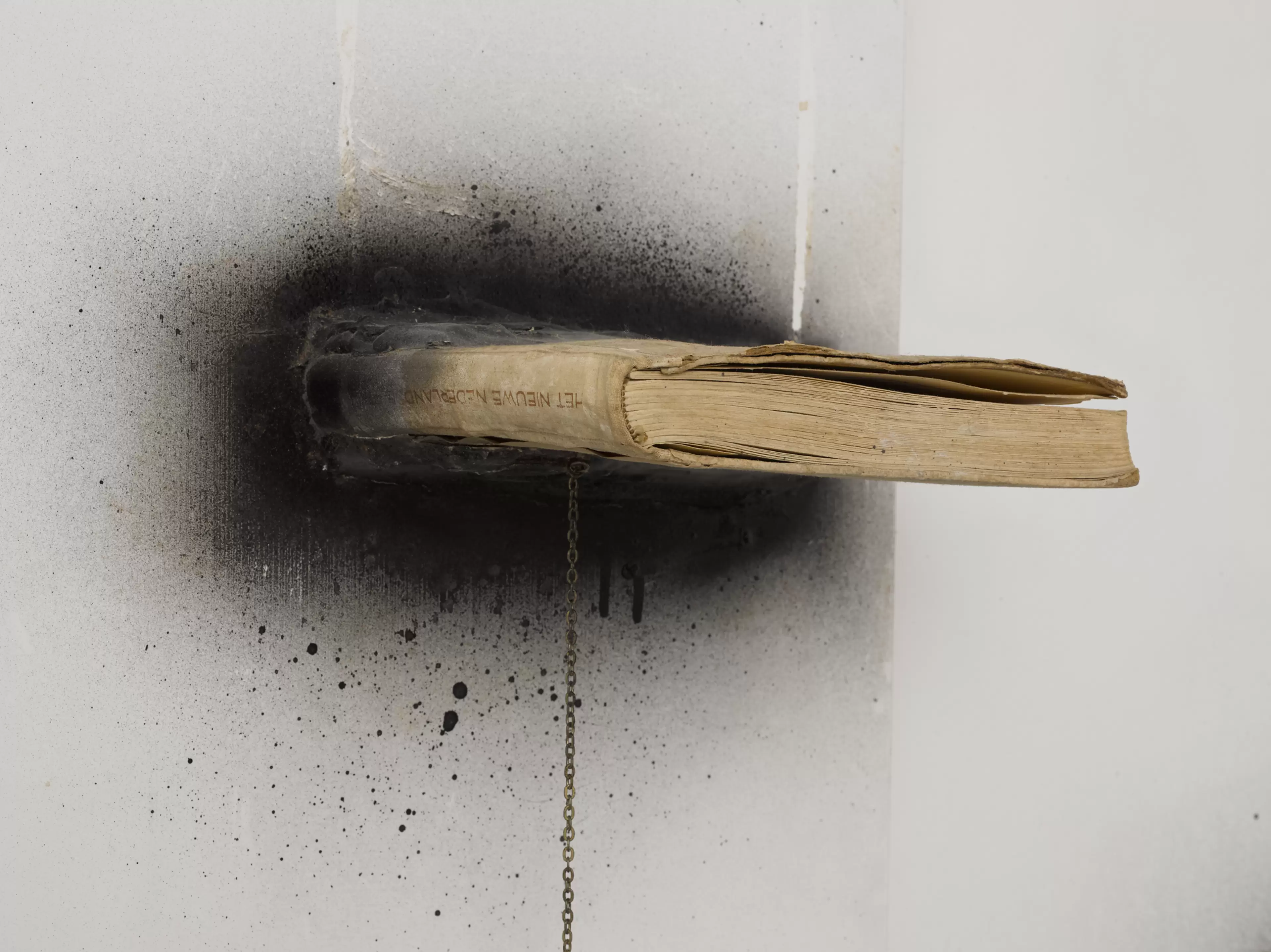
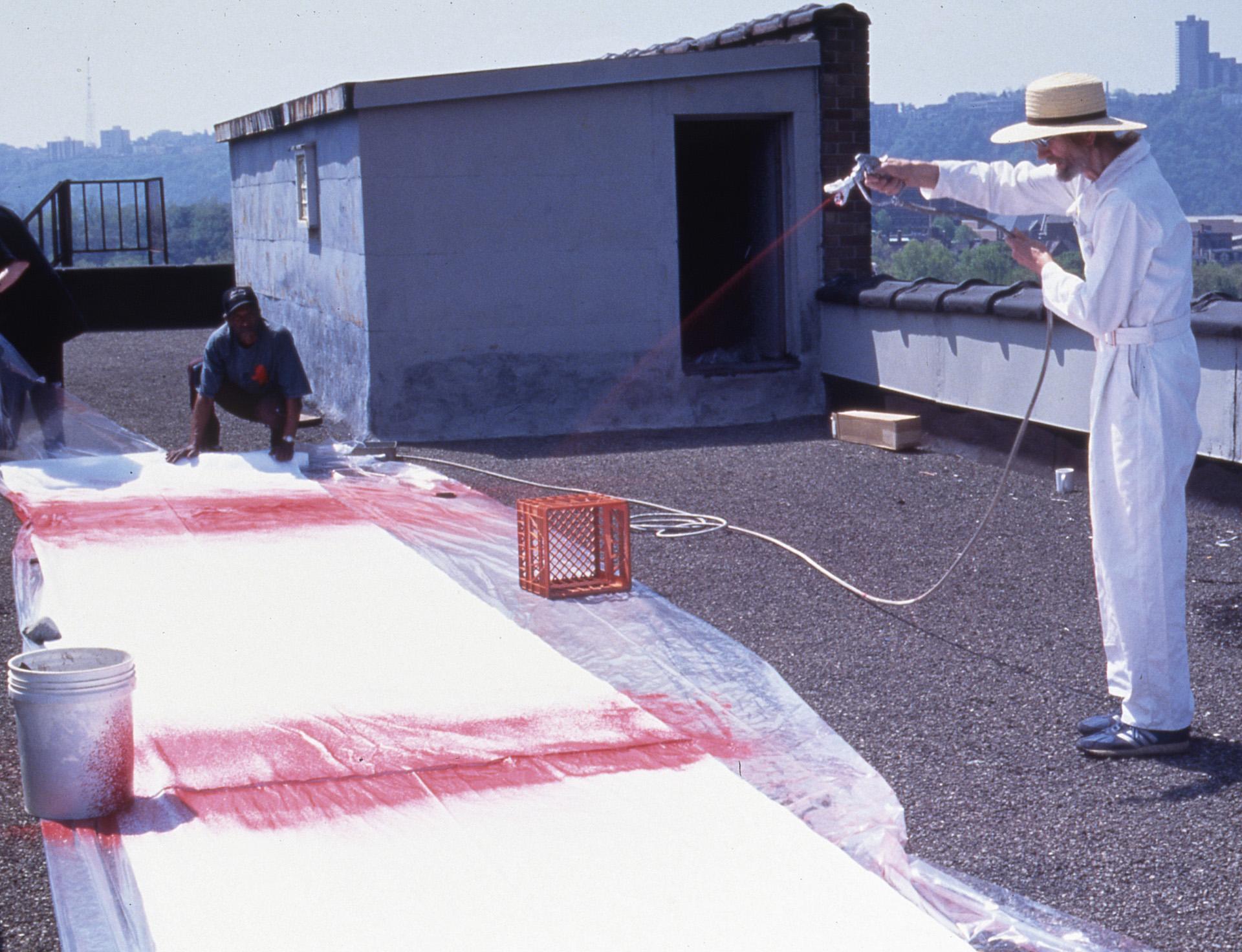
For Latham all artworks were considered events and were activated as such through diverse processes ranging from spraying, chewing, shredding or spitting to simply declaring.
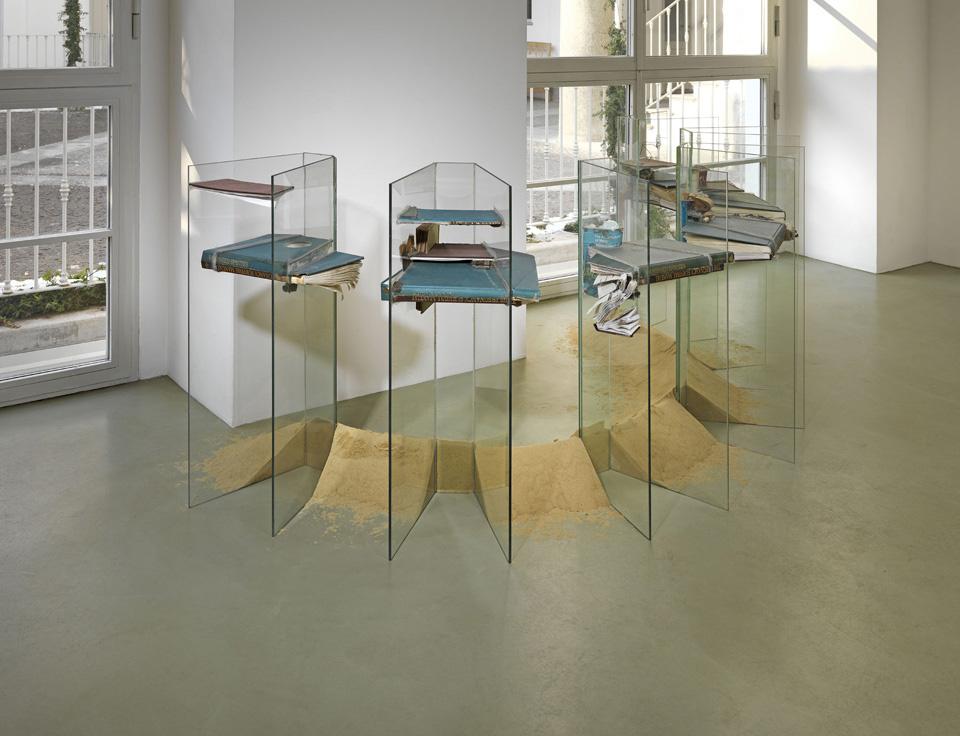
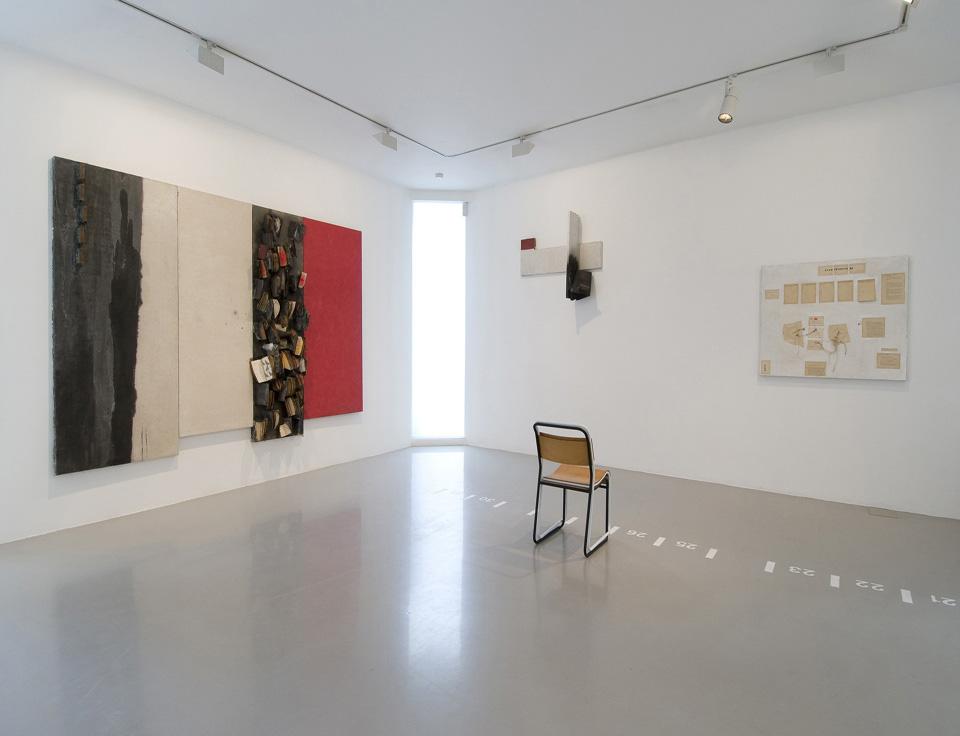
John Latham (1921–2006) was a pioneer of British conceptual art, who, through painting, sculpture, performances, assemblages, films, installation and extensive writings, fuelled controversy and continues to inspire. A visionary in mapping systems of knowledge, whether scientific or religious, he developed his own philosophy of time, known as ‘Event Structure.’ In this doctrine he proposed that the most basic component of reality is not the particle, as implied by physics, but the ‘least event,’ or the shortest departure from the state of nothing. The entire universe is to be viewed as a system of events in time, rather than objects in space. Thus, for Latham all artworks were considered events and were activated as such through diverse processes ranging from spraying, chewing, shredding or spitting to simply declaring. For instance, his seminal ‘skoob’ happened in 1966, while Latham was teaching at St Martins School of Art. Latham borrowed a copy of Clement Greenberg’s recently published art history opus, Art and Culture, from the school’s library, and invited his students to join him in a ritualistic ceremony: the chewing and spitting out of select pages of the book. Latham decanted the vestiges into a phial, doused it in acid and yeast, and fermented it for a year, then returning the liquid he described as ‘Essence of Greenberg’ to the school. The Spit and Chew event poked at Greenberg’s emphasis on space and form, which was contradictory to Latham’s focus on the function of time in art, and cemented itself as a key example of conceptual art. The resulting artwork: Art and Culture (1966-69) is now owned by the Museum of Modern Art in New York. Whether in his early spray paintings and One-Second Drawings, to the book reliefs he created in the 1960s, the roller paintings of the 1970s and the late glass towers works which incorporated bits of all theorems, John Latham maintained steadfast devotion to exploring the most complex cosmological ideas and questioning the traditional notions and structures of art, science and philosophy.
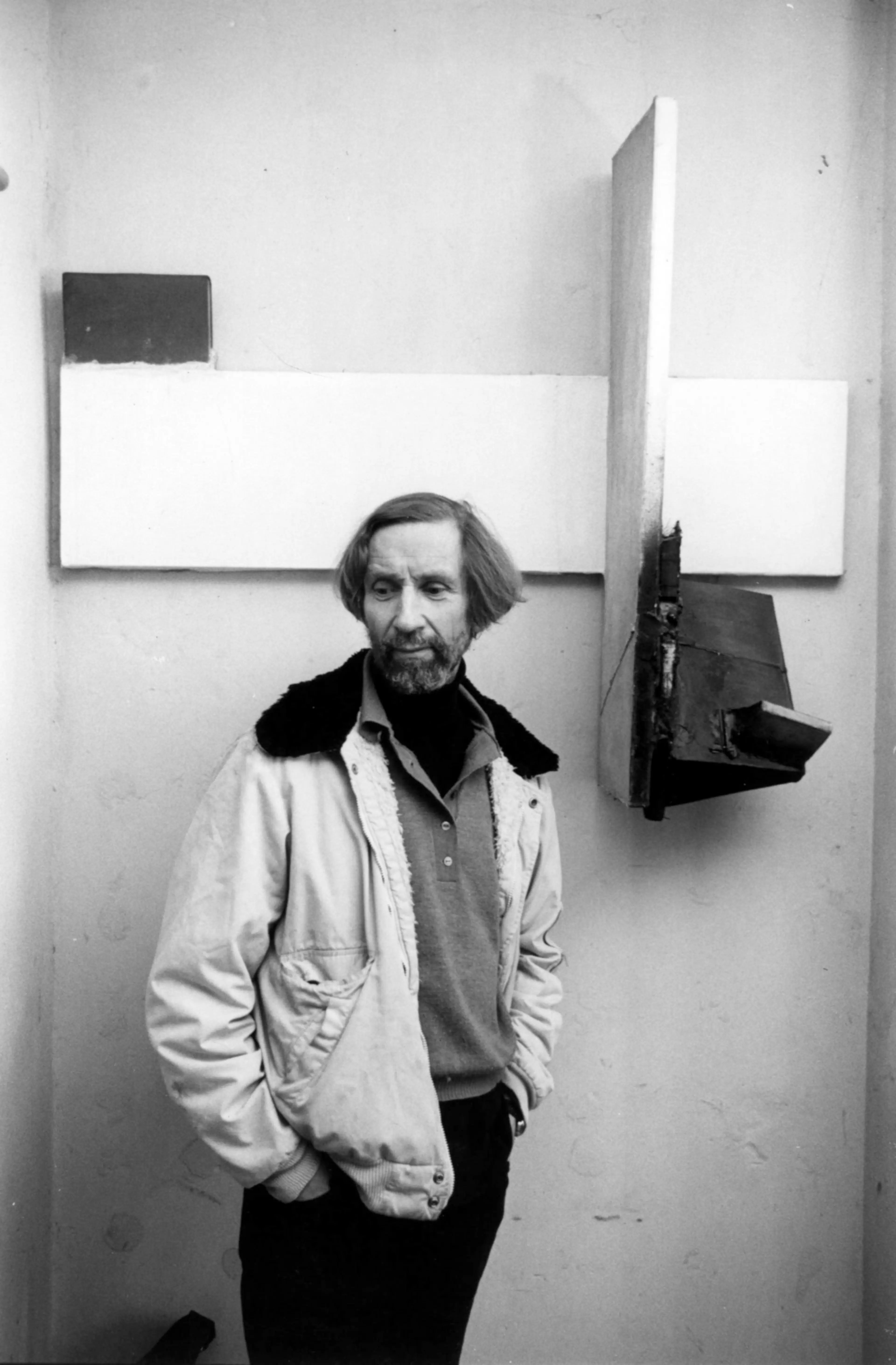
“The belief system is a rock-bottom source of non-negotiable problems of the day.”
John Latham
Books, wires, plaster, paint on canvas on hardboard
229 x 314 x 23 cm
90 1/8 x 123 5/8 x 9 in
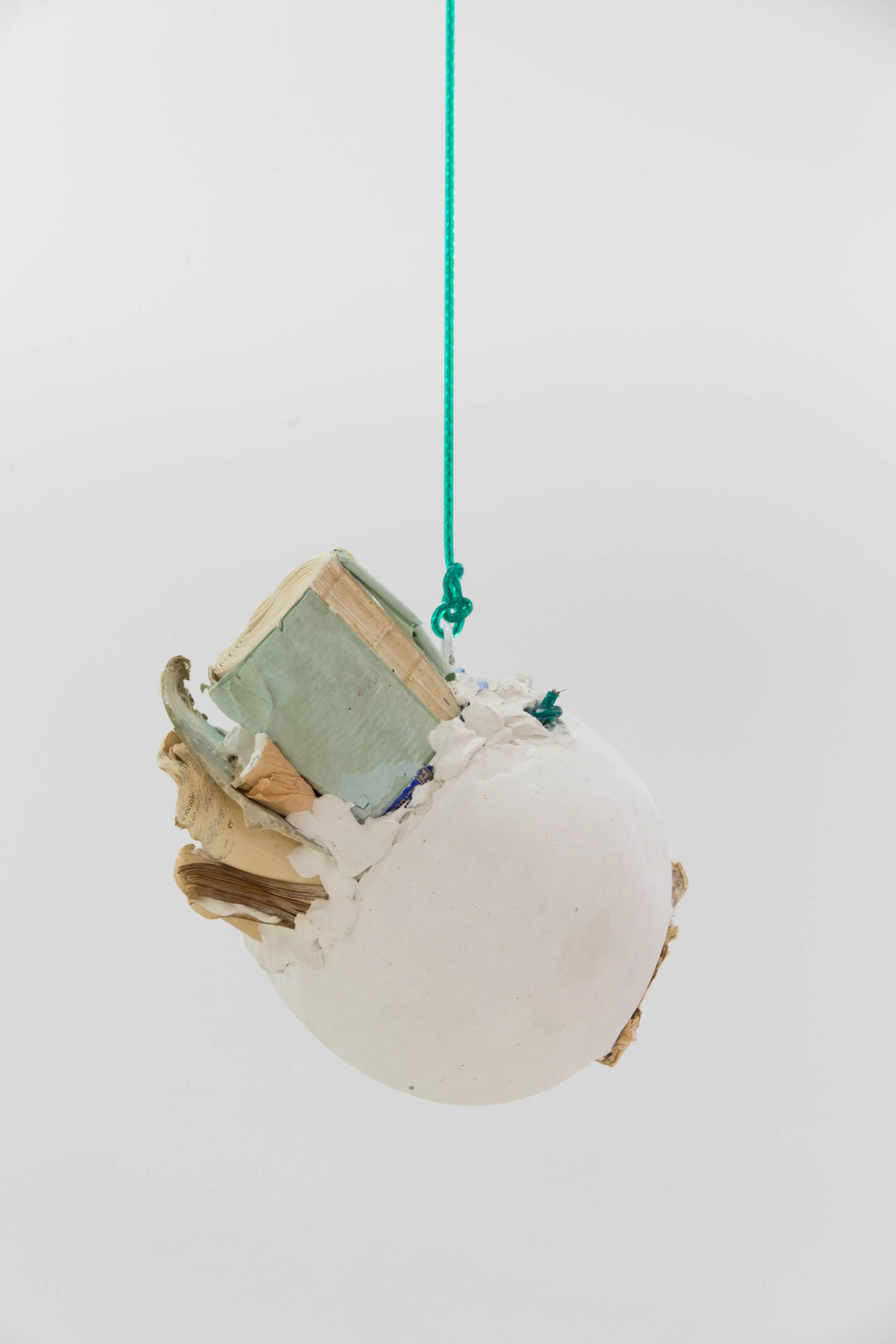
John Latham
Plaster, fragments of books, wire meshing
15 x 22 x 13 cm
5 7/8 x 8 5/8 x 5 1/8 in
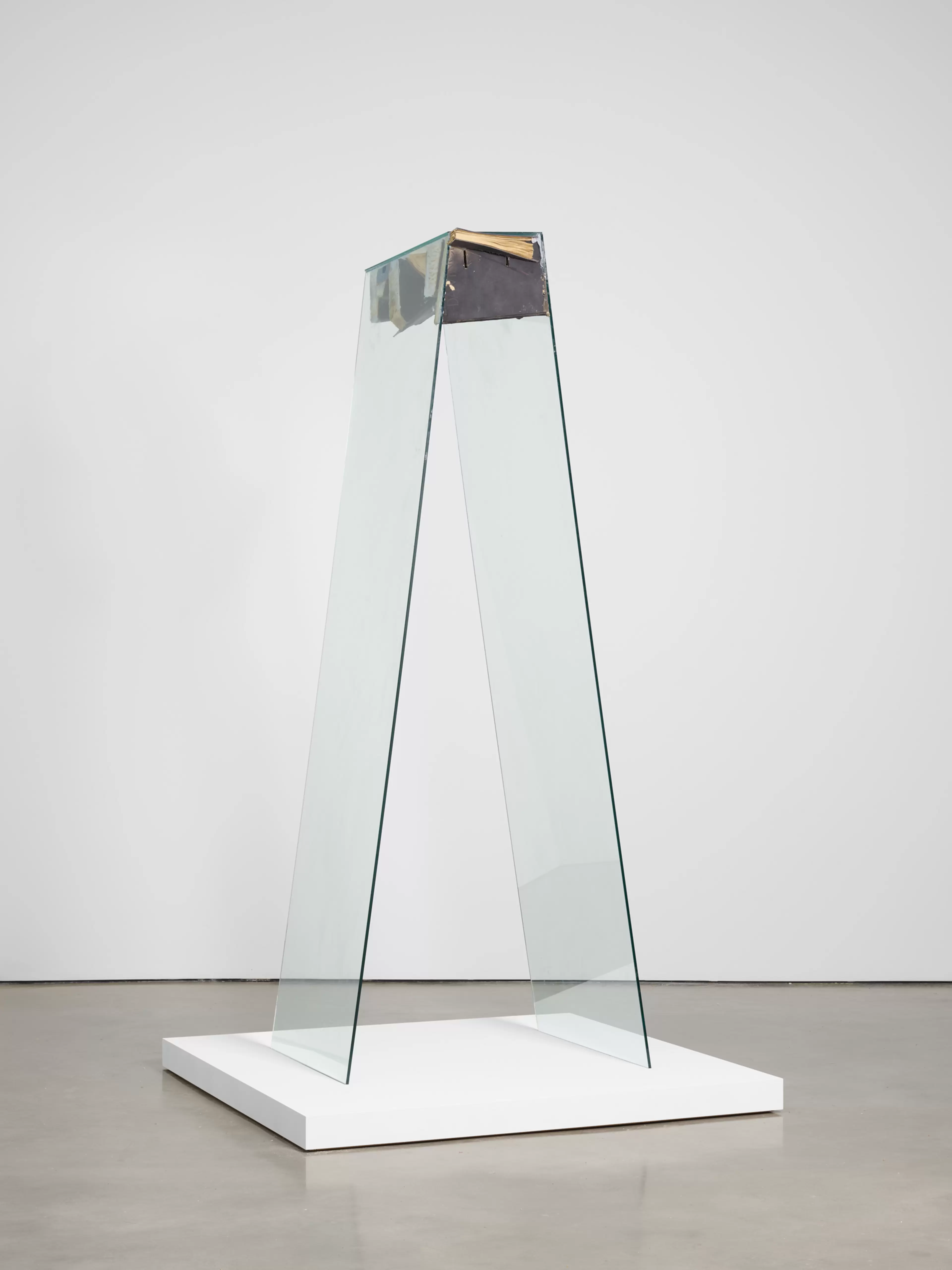
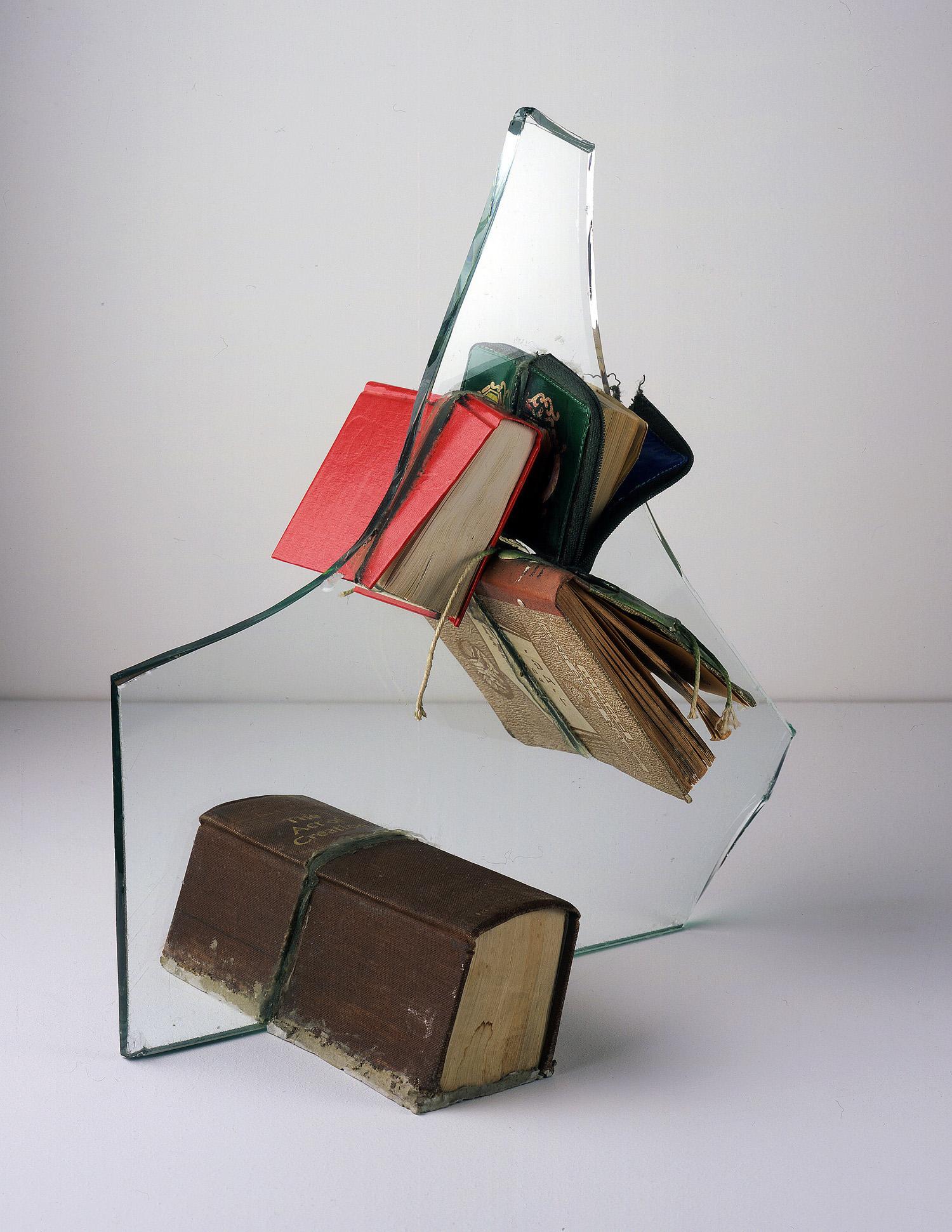
John Latham
Glass, books, spray paint
260 x 92 x 85 cm
102 3/8 x 36 1/4 x 33 1/2 in
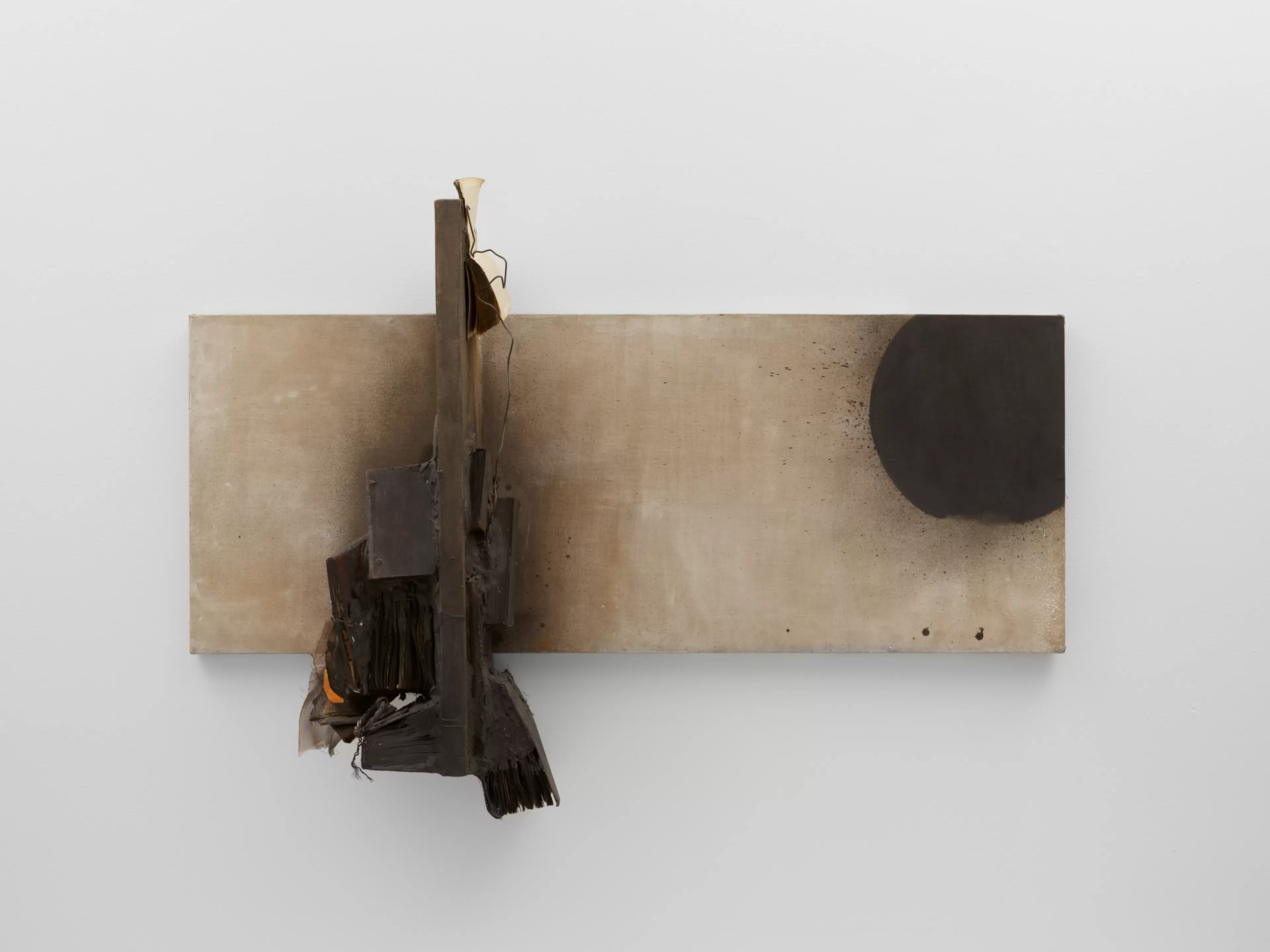
John Latham
Books, wire, wire mesh, machine fragments, plaster, paint on books on canvas
106.7 x 160 x 35.6 cm
42 x 63 x 14 in
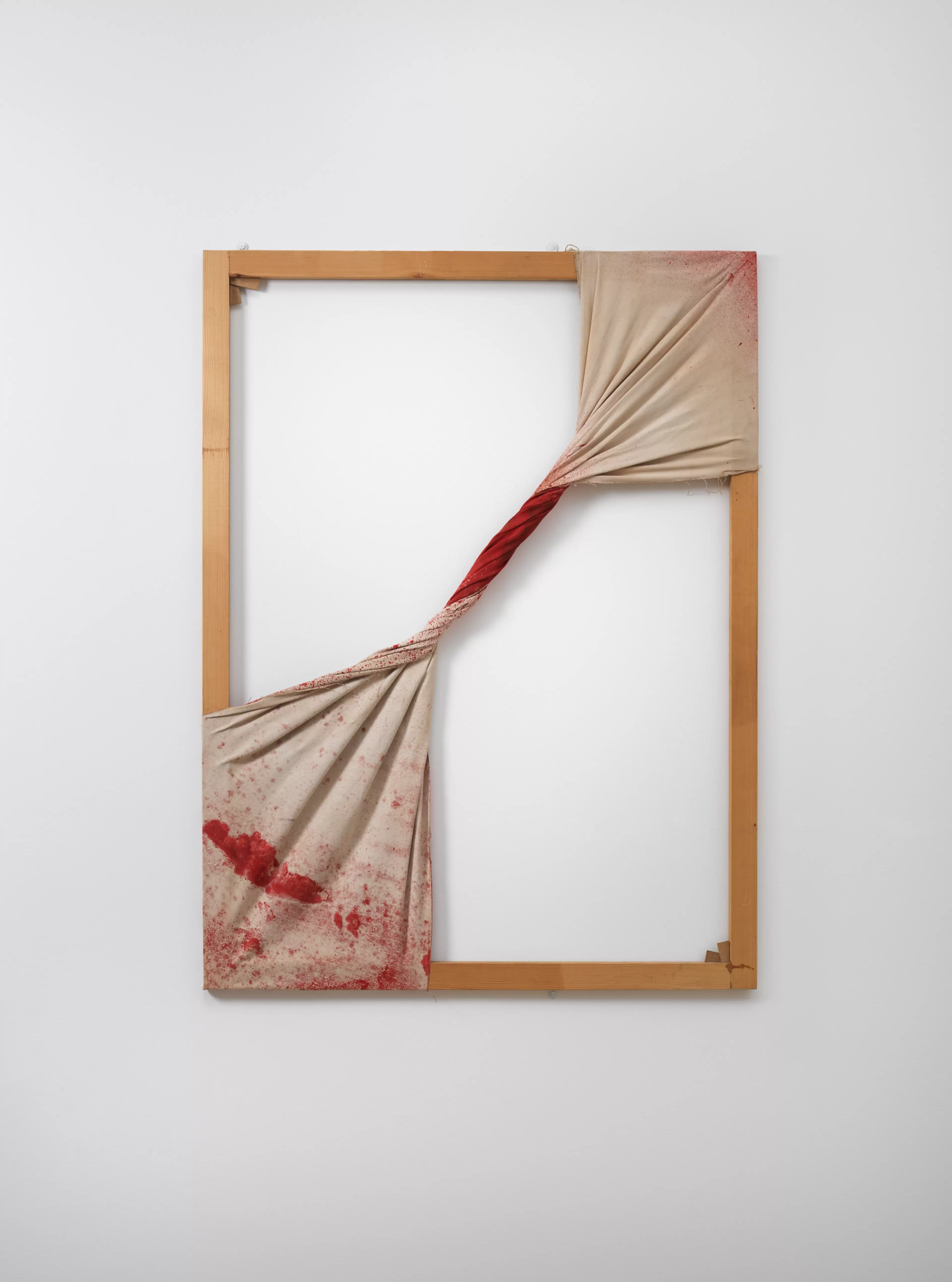
John Latham
acrylic on canvas
122 x 91.5 x 2 cm
48 x 36 x 0 3/4 in
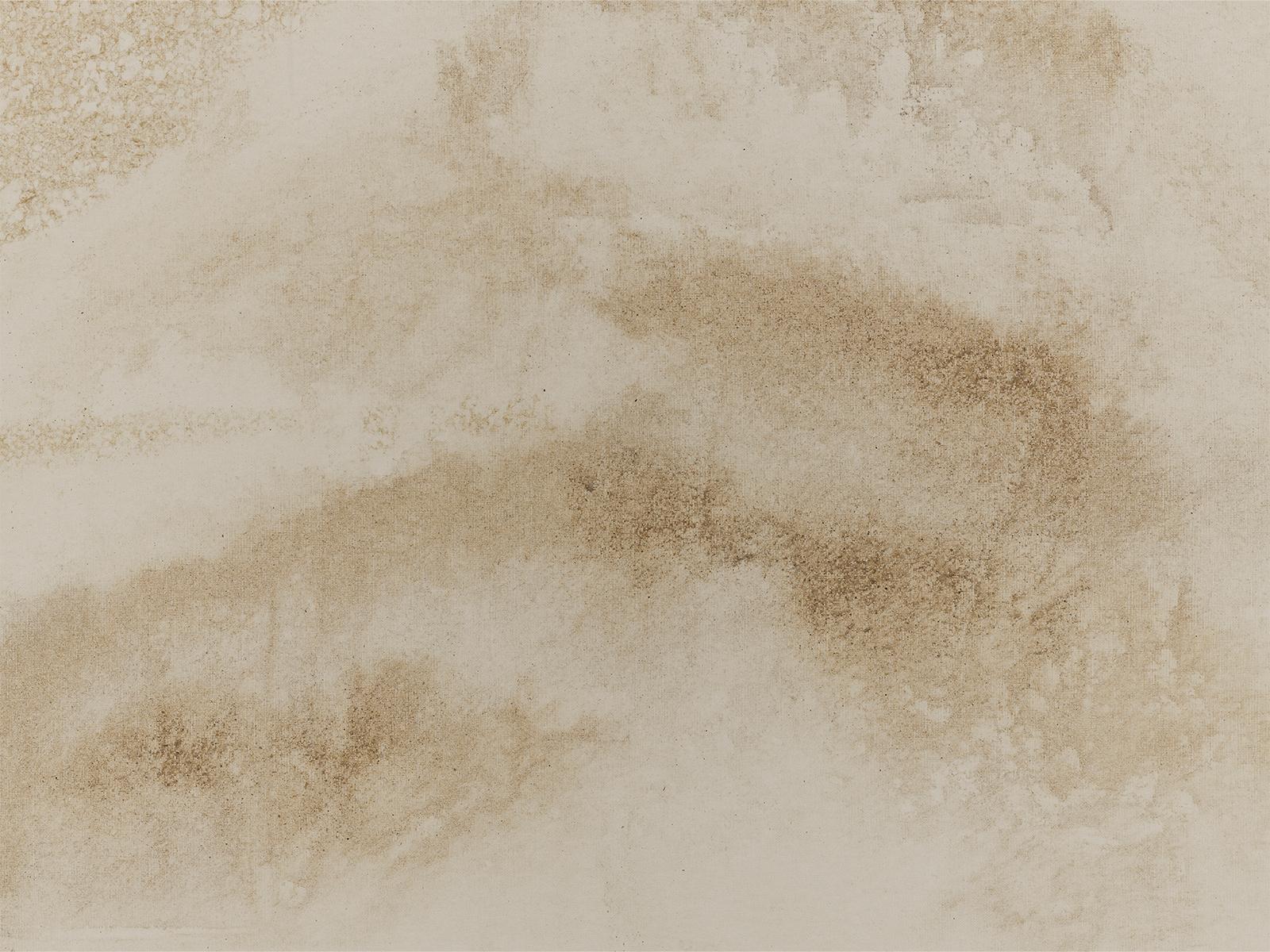
London, 2026
gallery
2026
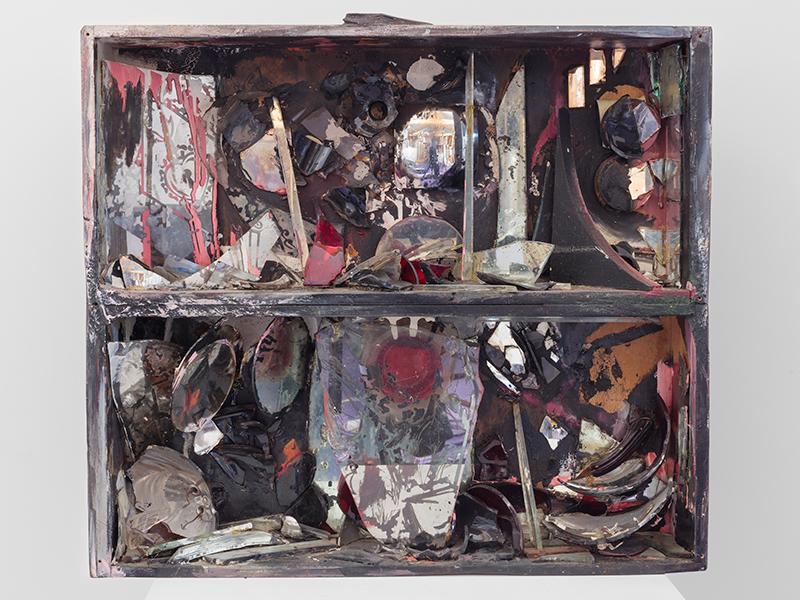
New York, 2023
gallery
2023
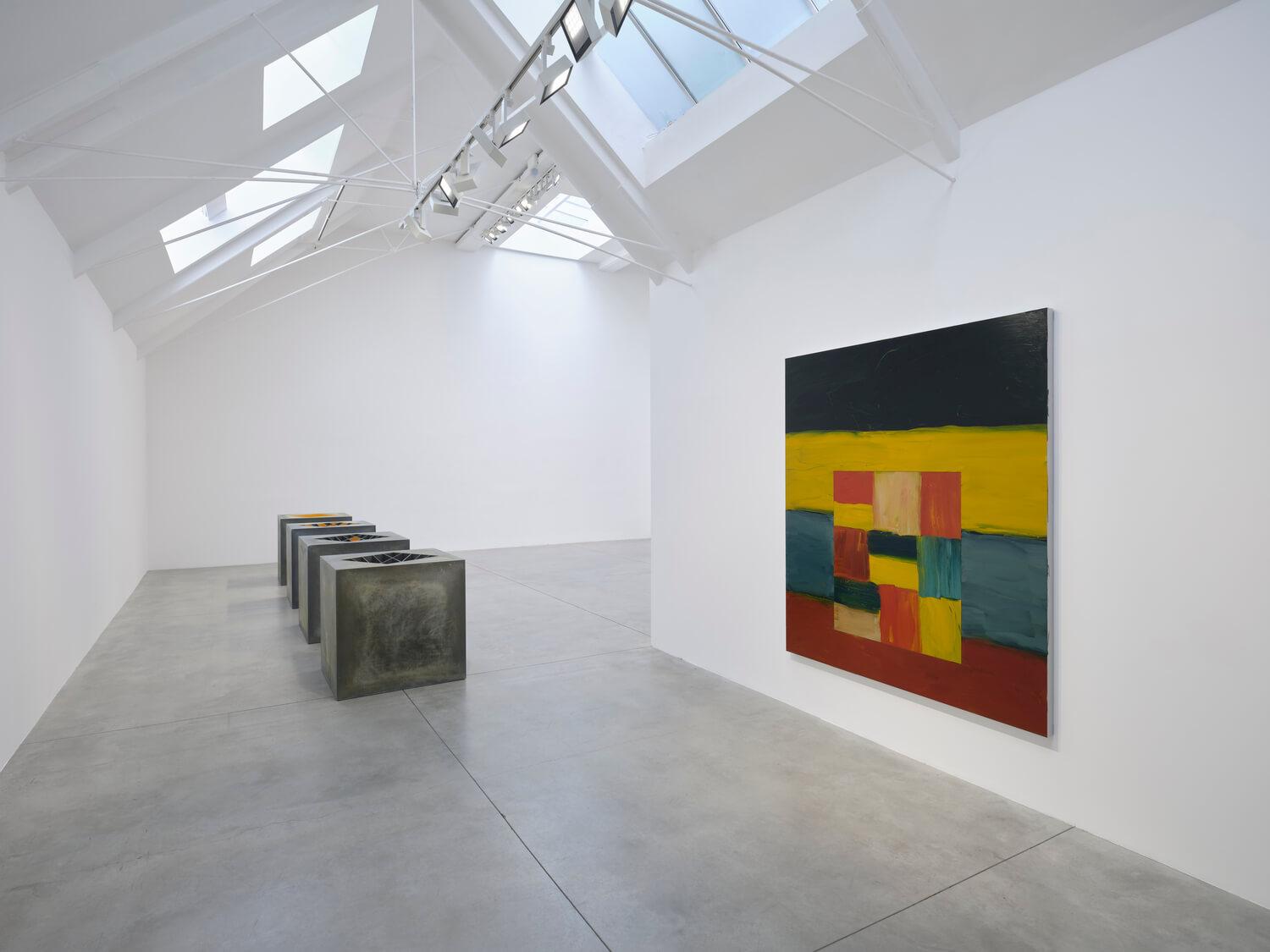
London, 2022
gallery
2022
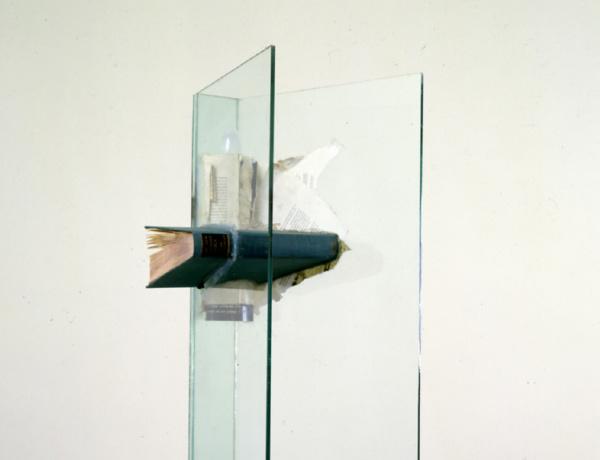
New York, 2018
gallery
2018
London, 2016
gallery
2016
Milan, 2012
gallery
2012
, 2010
gallery
2010
, 2005
gallery
2005
, 2005
gallery
2005