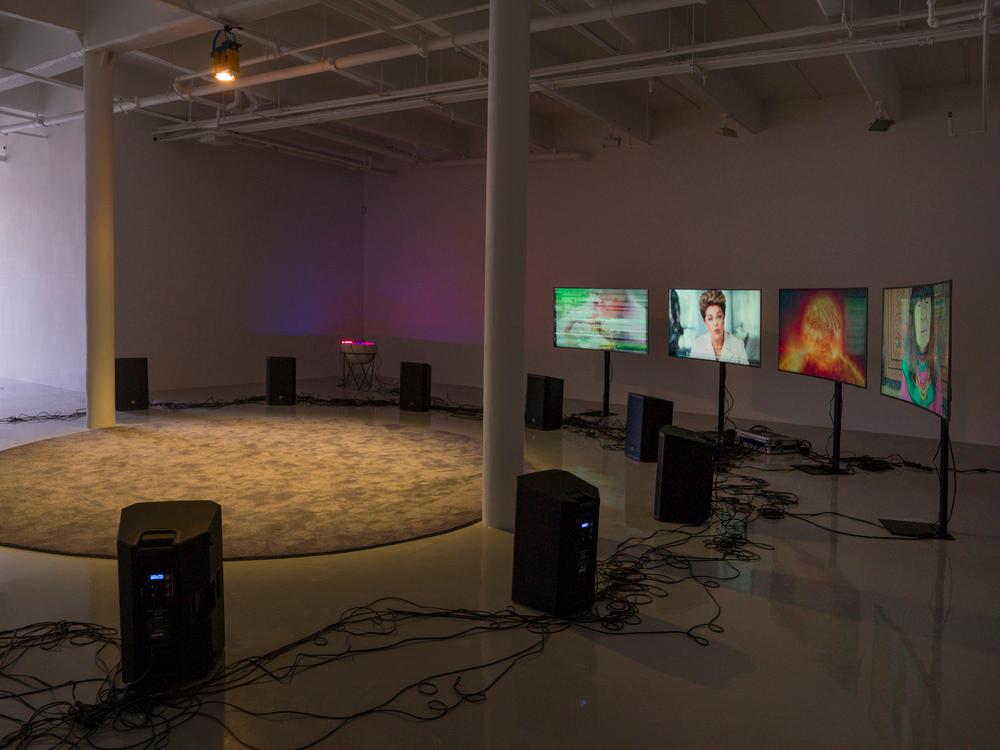
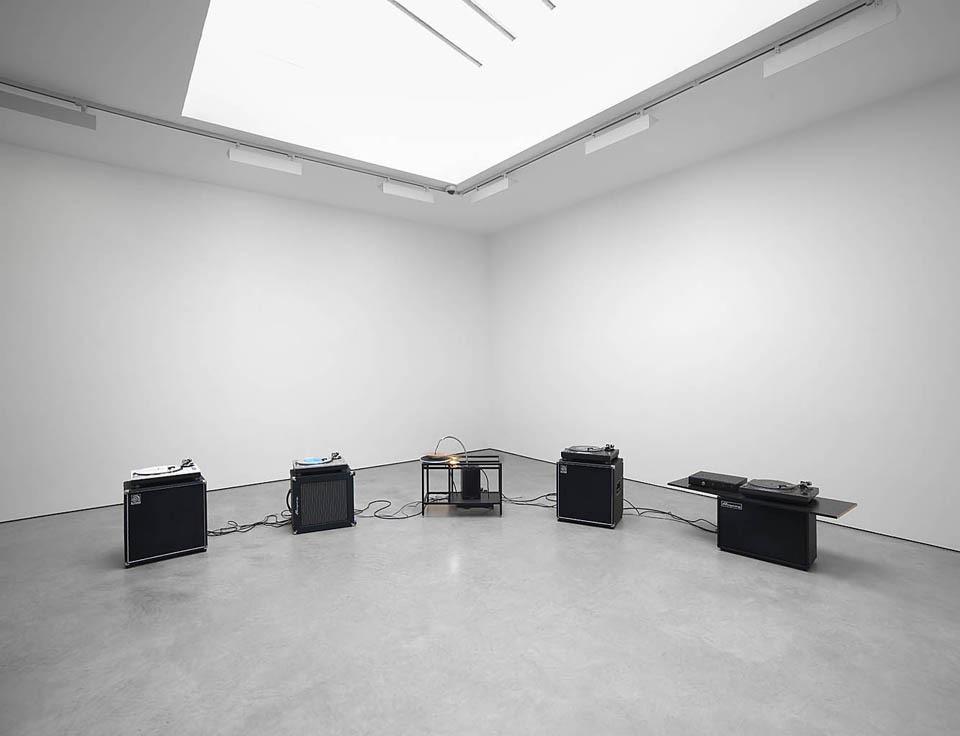
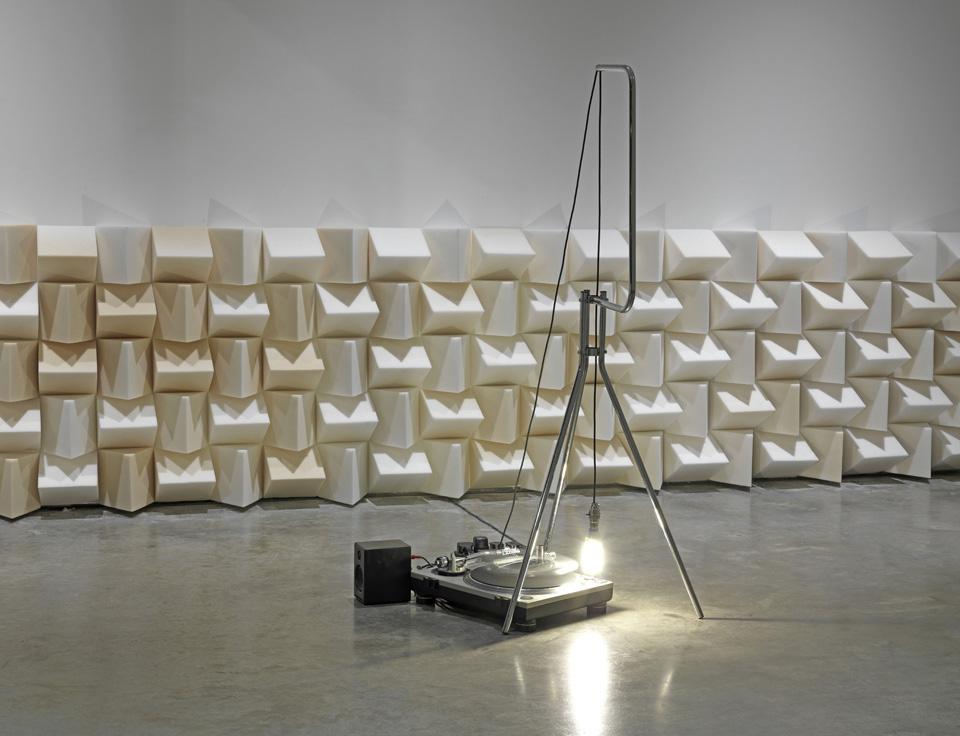
Haroon Mirza has won international acclaim for installations that test the
interplay and friction between sound and light waves and electric current.
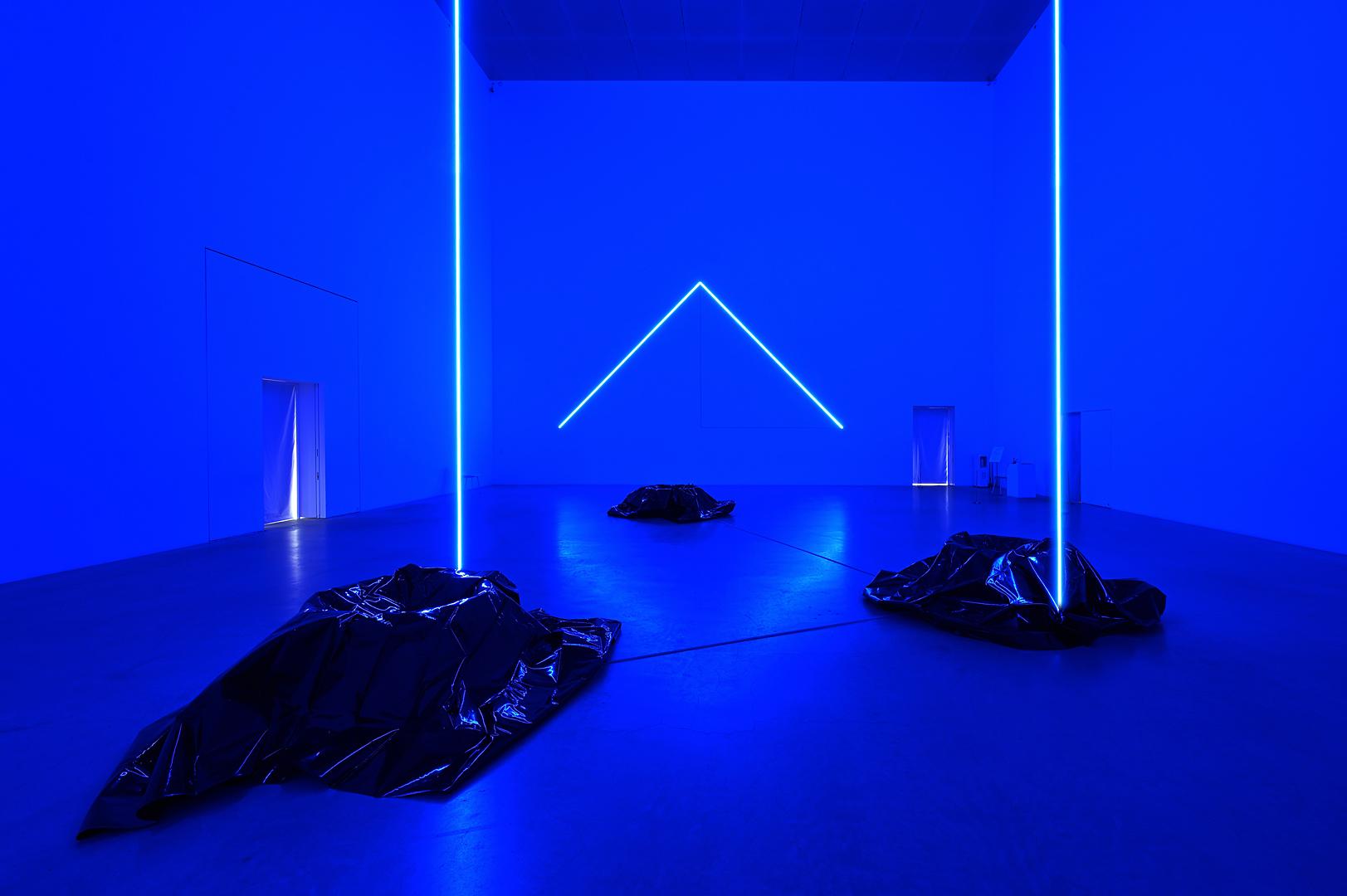
He devises sculptures, performances and immersive installations, such
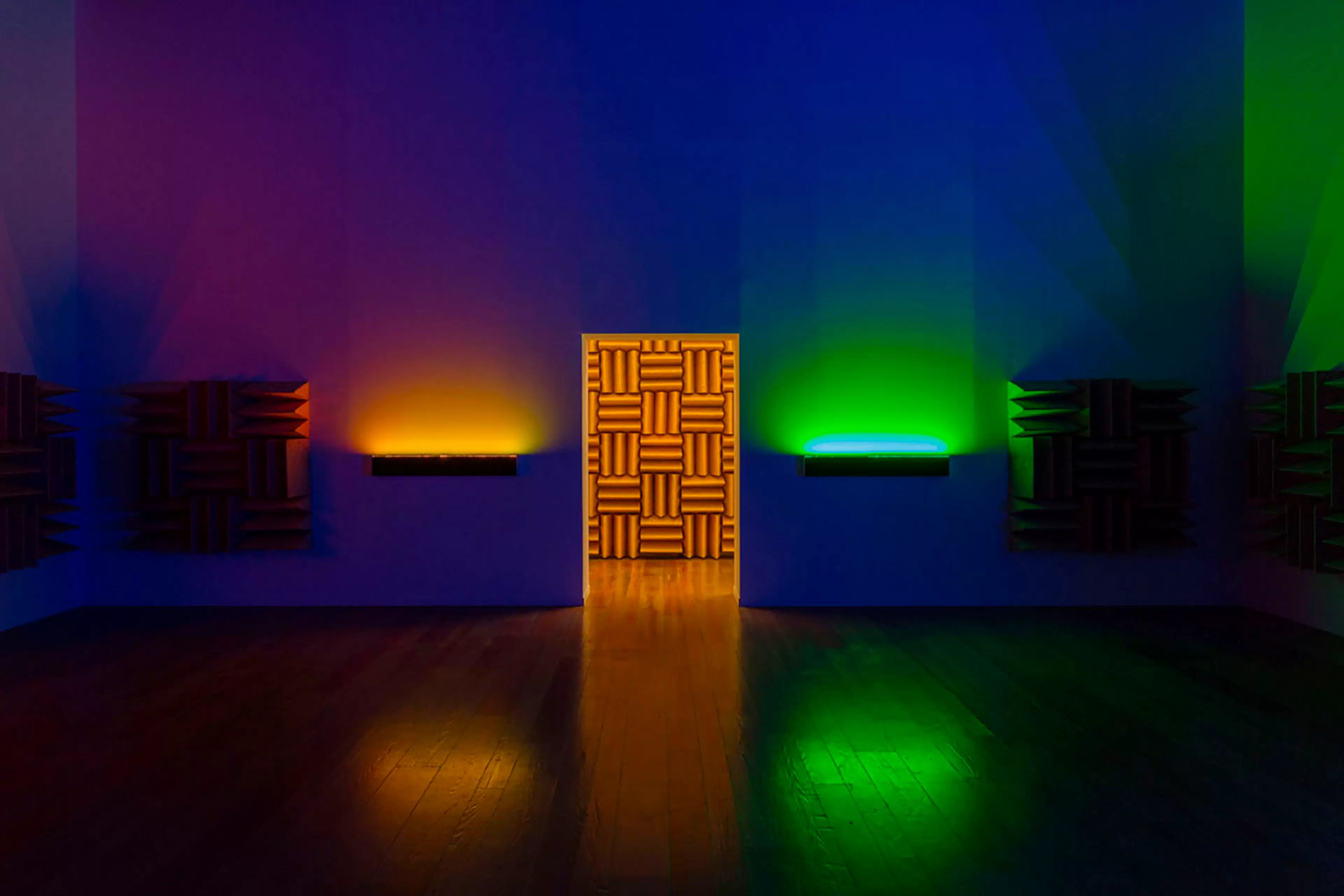
as The National Apavillion of Then and Now (2011) – an anechoic chamber
with a circle of light that grows brighter in response to increasing drone,
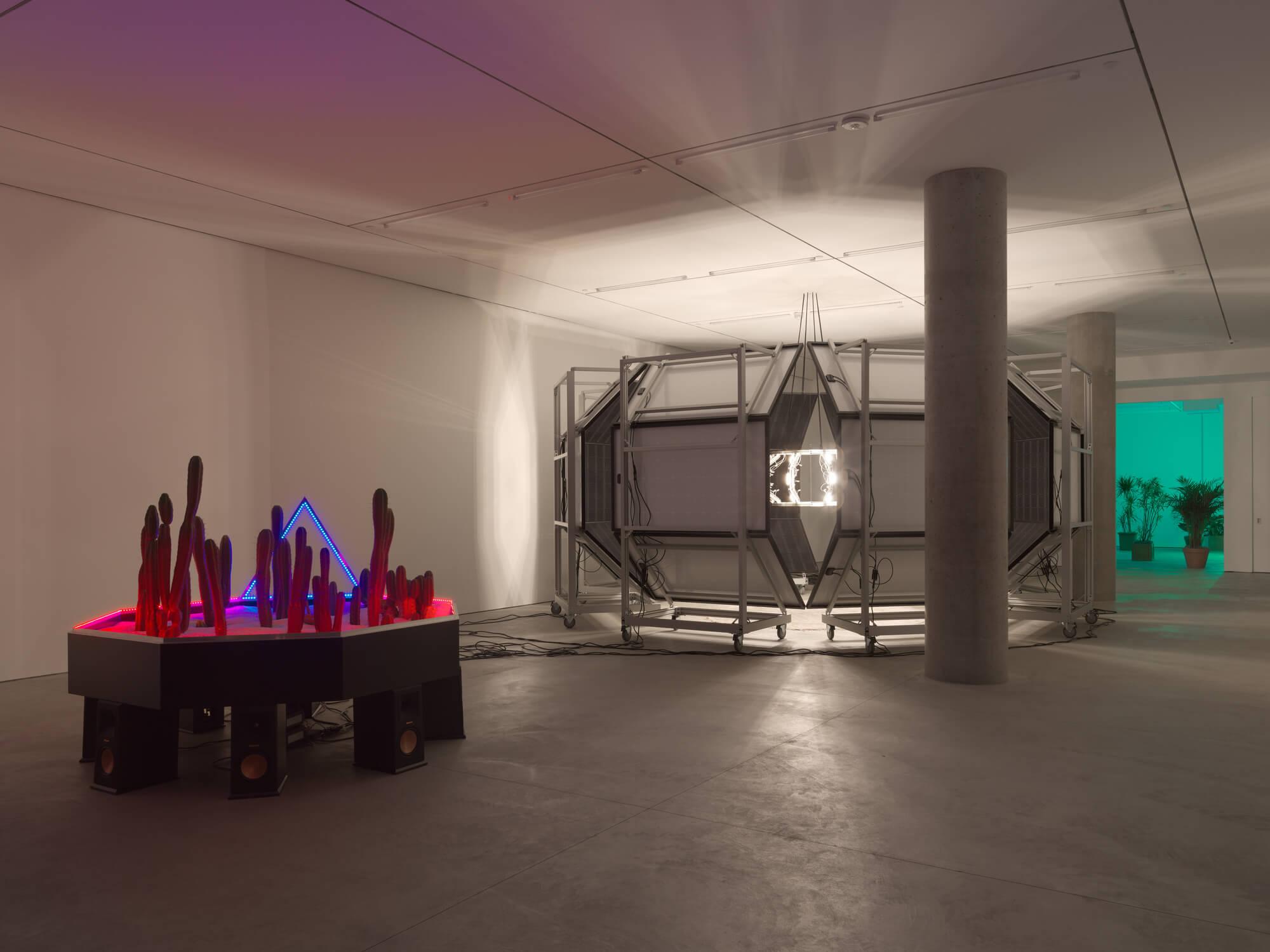
and completely dark when there is silence, or the Dyson Sphere (2022)
– an earthbound version of a hypothetical, off-world megastructure in
which a sun-like central tungsten light powers a carapace of photovoltaic
panels. An advocate of interference (in the sense of electro-acoustic or
radio disruption), he creates situations that purposefully cross wires.
He describes his role as a composer, manipulating electricity, a live,
invisible and volatile phenomenon, to make it dance to a different tune
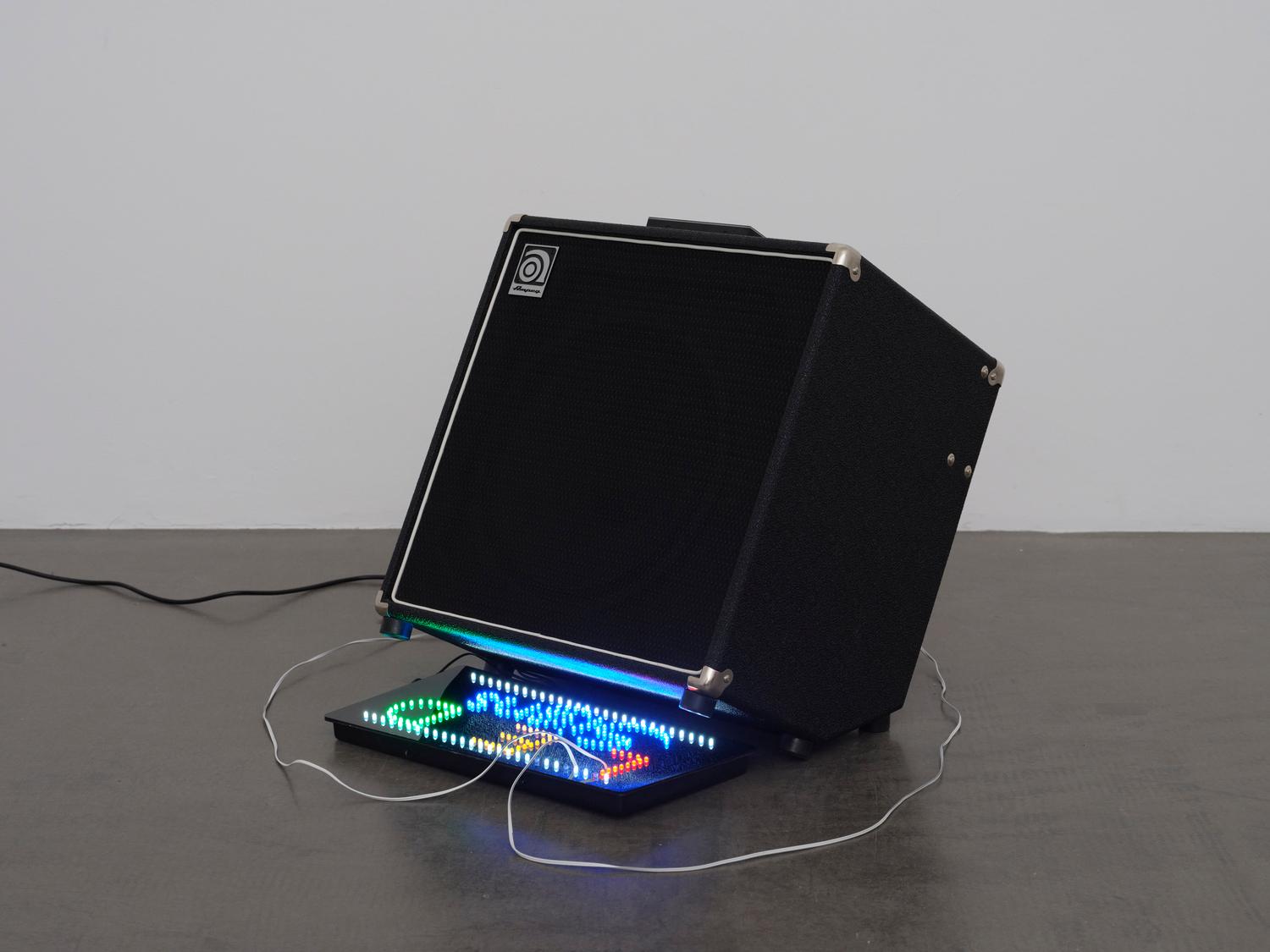
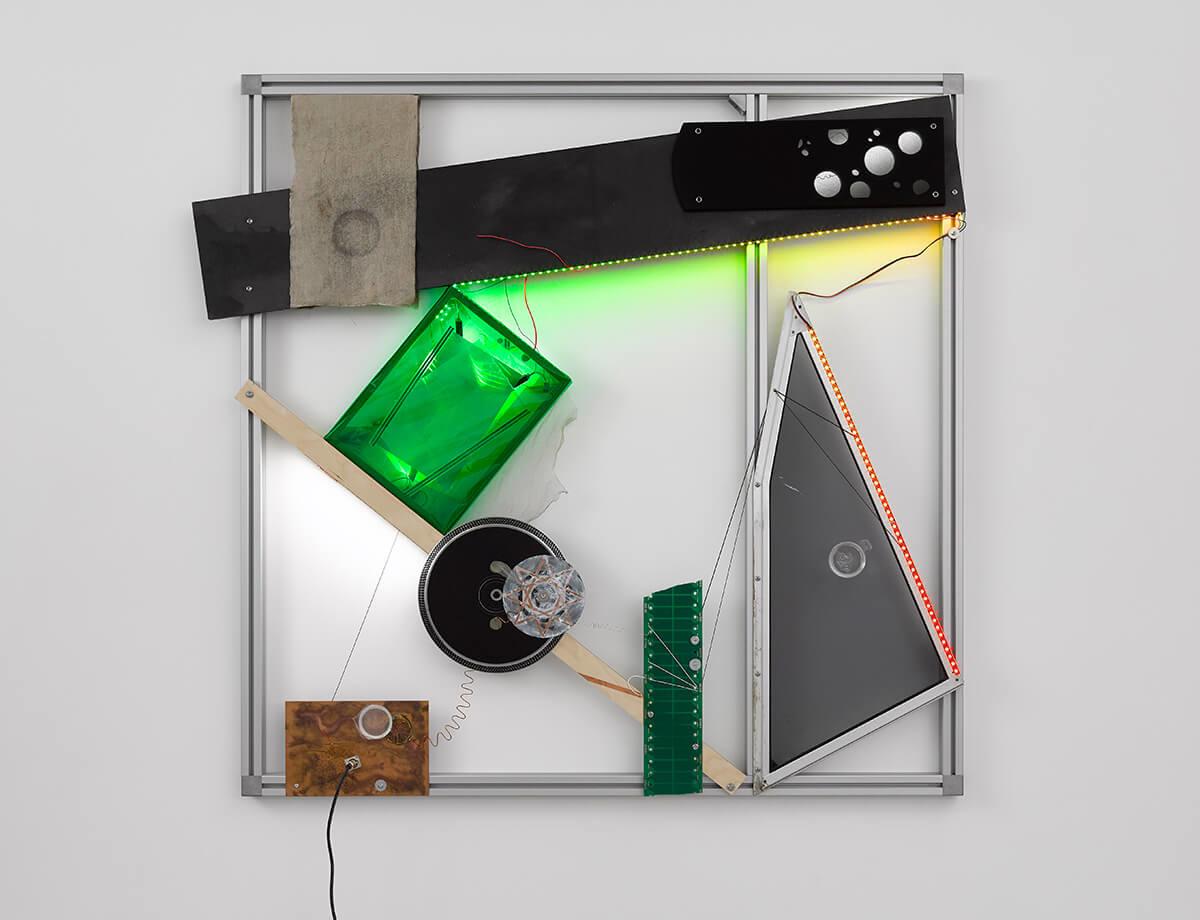
and calling on instruments as varied as household electronics, vinyl
and turntables, LEDs, furniture, video footage and existing artworks to
behave differently. Processes are left exposed and sounds occupy space
in an unruly way, testing codes of conduct and charging the atmosphere.
Mirza asks us to reconsider the perceptual distinctions between noise,
sound and music, and draws into question the categorisation of cultural
forms. “All music is organised sound or organised noise,” he says. “So as
long as you’re organising acoustic material, it’s just the perception and
the context that defines it as music or noise or sound or just a nuisance”
(2013).